C103 - The Semiotics of Advertising
Week 15, Asynchronous Bundle 19
Written assignment due Friday, 12/12 at 11:59 pm
Introduction
- Goal: Explore multi-level meanings built upon signs at level of both the individual sign and the larger text.
- Textbook connection: 199-210
Connotation, Denotation, and Myth
Q1:
- The material in this bundle was not brought up in Monday's lecture, but is based upon the end of Chapter 5 in the textbook, starting around page 210. You may find it helpful to review that before tackling this bundle.
- Denotation vs. connotation
- Definitions & straightforward examples
- Denotation refers to the literal meaning of a word, the "dictionary
definition". For example, if you look up the word snake in
a dictionary, you will discover that one of its denotative meanings
is "any of numerous scaly, legless, sometimes venomous reptiles,
having a long, tapering, cylindrical body and found in most tropical
and temperate regions."
- Occasionally there is some difference in opinion about what a
word means at the level of denotation. Here's an example involving the term "muffin top" in
a Lifesavers ad.
- Connotation, on the other hand, refers to the associations
that are connected to a certain word or the emotional suggestions related
to that word. The connotative meanings of a word exist together
with the denotative meanings. The connotations for the word snake could
include nastiness, evil, and danger.
- Consider the distinction between fine and good
- On the level of primary denotation, fine should mean
something stronger than merely good
- Compare the use of the terms in evaluating, say, the condition of coins or stamps for their
value in a collection, where "fine" condition is better than "good" condition.
- Yet on the level of connotation fine is quite blah, which
may promote good to a higher status, since it lacks that
connotation of ordinariness.
- I often tell an anecdote about something a grad student of mine said
once to me in setting up a paper topic for a seminar. He came in to discuss his term paper topic with me, we talked for a while, and at some point I said, "I guess that'll be fine", and he responded, "I think it might not just be fine, it could actually be good".
- Here's another example that makes the same point, from the
film Music
and Lyrics, an undistinguished romantic
comedy starring Hugh Grant and Drew Barrymore
- So why speak about denotation and connotation as separate notions?
- A useful approximation
- Think of them as endpoints on another continuum
- Both denotation and connotation are interpreted in terms of a cultural
code (codes are the topic for Week 6, the last week of this session).
- This is not a fixed constant!
- It illustrates the difference between first-order signification (denotation) and second-order signification (connotation)
- The textbook has a diagram (p 214) based on the two-level modification of the Saussurian model of the sign, which we encountered earlier:
- Diagram (based on Hjelmslev)
- Q1. The familiar English adjective "old" has a clear denotative meaning, and it is basically neutral, or flexible in terms of connotation. Make up two sentences using the word "old", one in which it has a clear positive connotative meaning (where being old is unambiguously a positive characteristic of the noun modified by the adjective) and one in which it has a clear negative connotation. Hint: Don't make up sentences using Joe Biden, as the use of old intersects with ideological and partisan considerations which will interfere with clarity, and don't use any modifiers (additional adverbs or adjectives) with "old" (such as: "too damn old", "terribly old", etc.), as they also confuse the issue.
Q2:
- Myths amount to bundles of complex signs, and can be quite extensive.
- How does the notion of myth relate to denotation and connotation?
- It's like a 3rd stage in a progression of "signification":
denotation -> connotation -> myth
- The term myth has at least three distinct but relevant meanings
- (general) traditional story from ancient societies which involve
primordial types (gods, exemplary humans, etc.) or which seek to explain
some aspect of the world (such as the parable of Noah and the ark)
- (Chandler) a real or fictional story, recurring theme, or character
type that appeals to our consciousness by embodying cultural ideals or
expressing deep, commonly felt emotions (this is the meaning we are primarily concerned with in this bundle)
- (Fowler) essentially a widely-accepted idea which is in fact false
(very common in advertising), such as the notion that we need to keep up with our neighbors in terms of the stuff we own and acquire (a great car, a well-kept lawn, etc.)
- Let's consider several cultural myths and how they get built into media applications, including advertising.
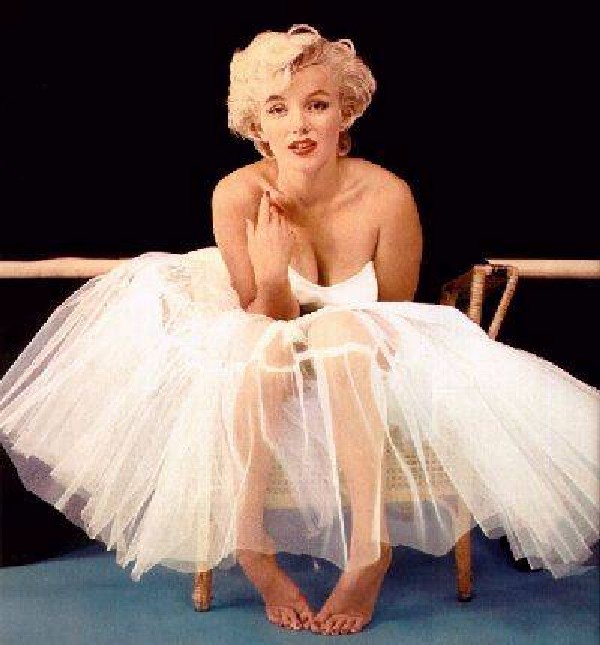
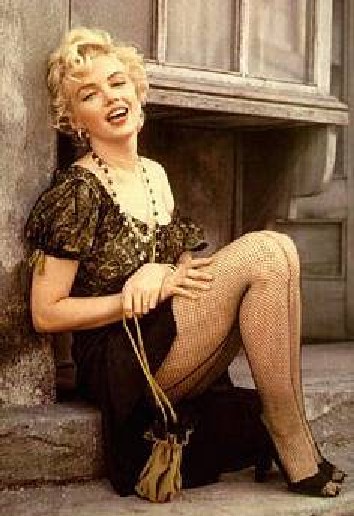
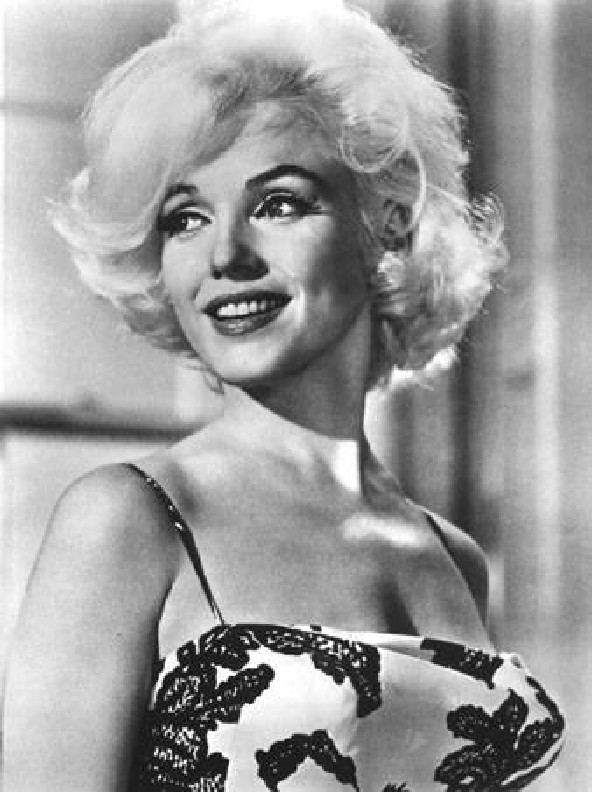
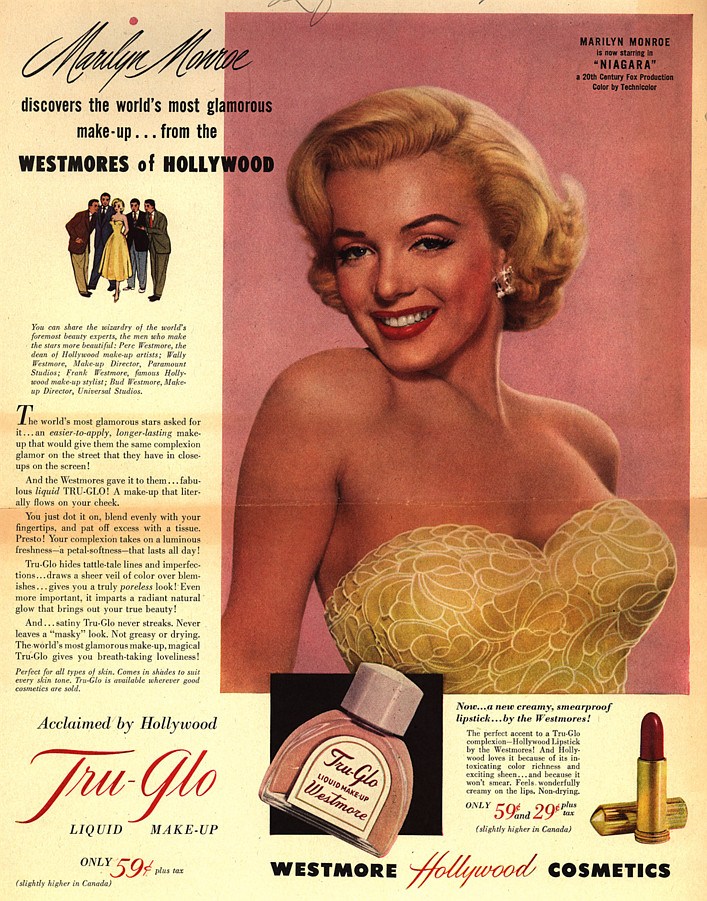
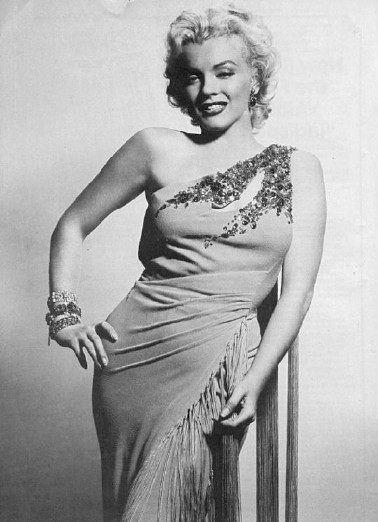
- Myth #1: Marilyn Monroe: the sexy and glamorous, but simultaneously innocent
and child-like movie star (known inter alia as the very first Playboy Playmate of the Month).
- Q2. Contrast two of the above photos of Marilyn Monroe in terms of how one reflects the myth and how the other fails to reflect it. (Please identify the photographs you discuss by number, so we will be absolutely sure which ones you are talking about.) What details in these photos suggest or deny the myth?
Q3:
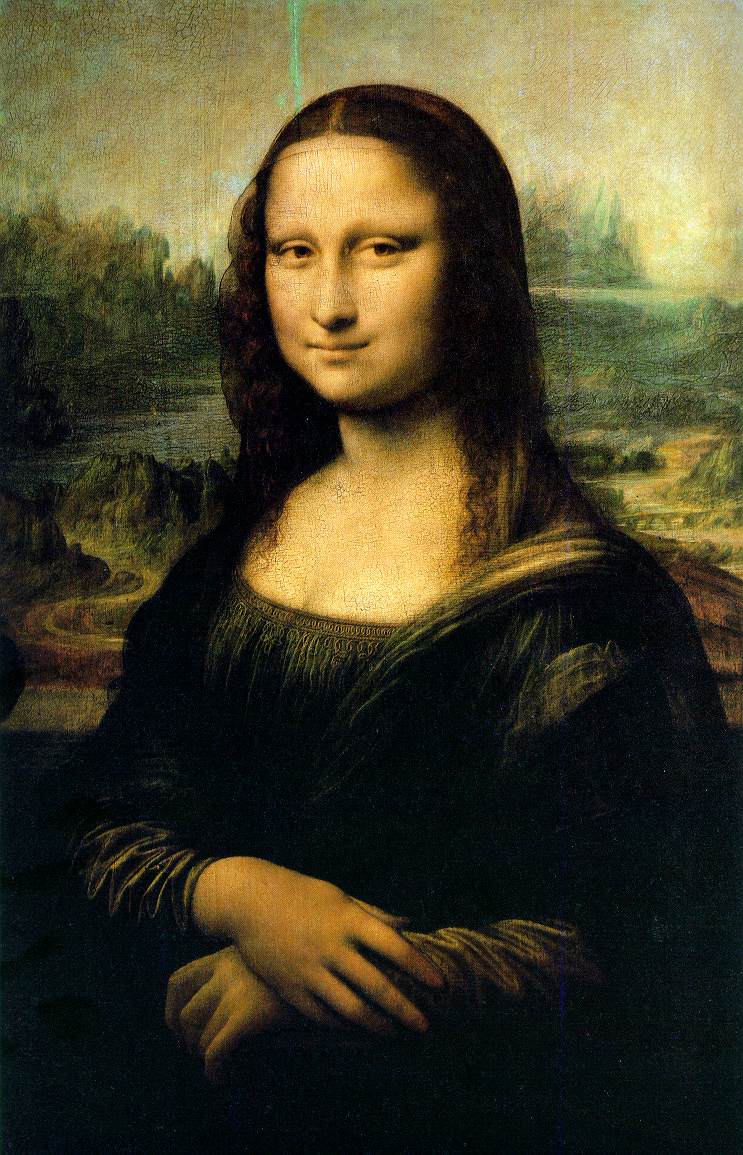
- Myth #2: The Mona Lisa.
- Here's a reproduction of the real painting by Leonardo da Vinci
- The myth embodied by the Mona Lisa has several essential components, but first and foremost it is built upon the enigmatic smile that she wears on her face, suggesting secret knowledge of something that the onlooker doesn't have, and pleasure at that knowledge. Feel free to google the painting and read more about it if you are interested.
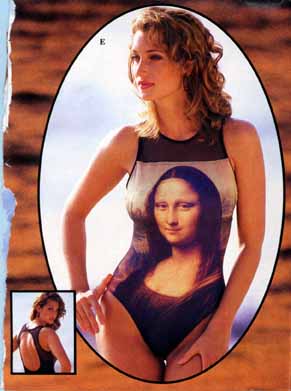
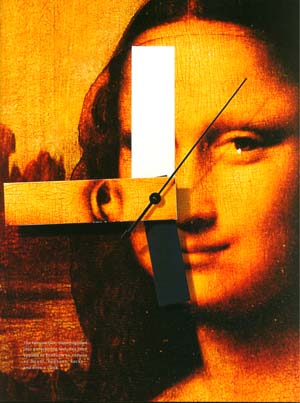
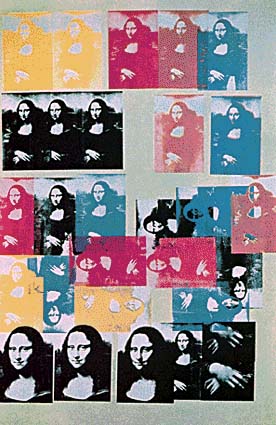
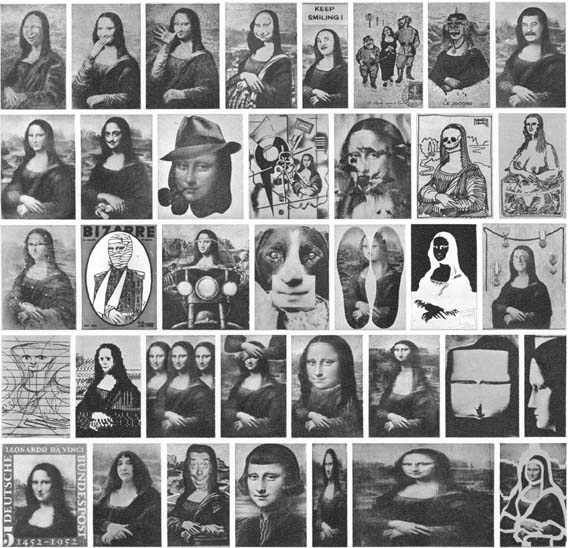
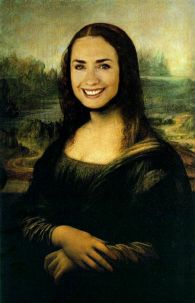
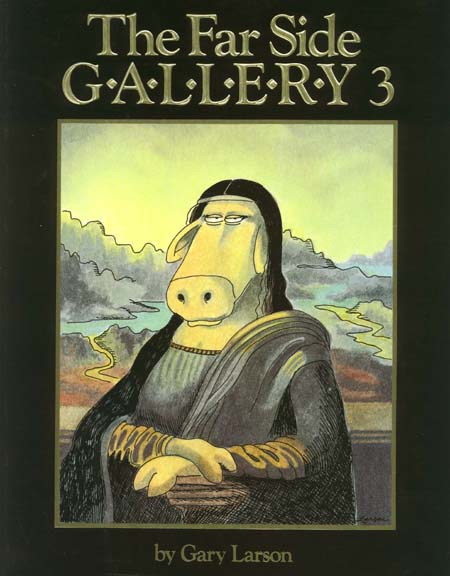
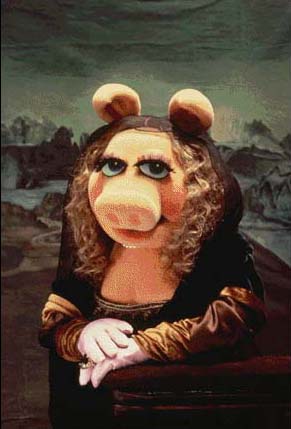
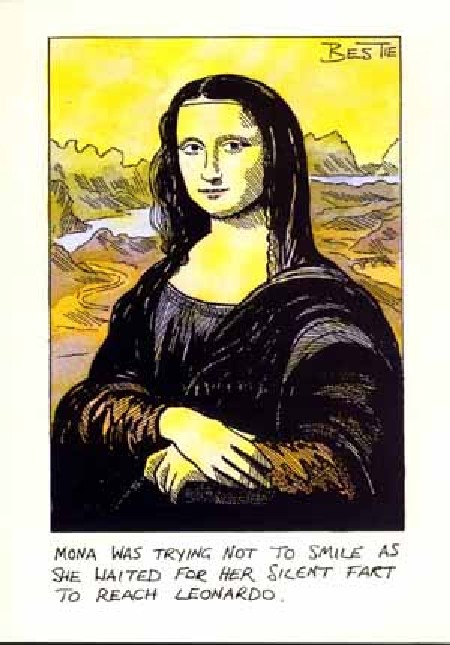
- Here are several uses of the Mona Lisa image that embody that myth in straightforward associations
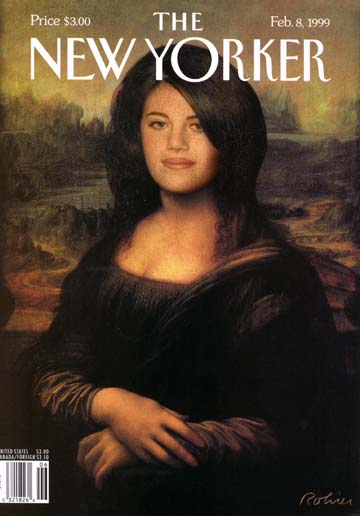
- Many parodies & pastisches have been based upon the Mona Lisa, mostly just having fun (although the Monica Lewinsky parody is very funny and cruel at the same time)
- Here's a great little bit of humor I just wanted to share: a clip from a recent John Oliver show on HBO making fun of a failed London musical show about Leonardo Da Vinci and the Mona Lisa.
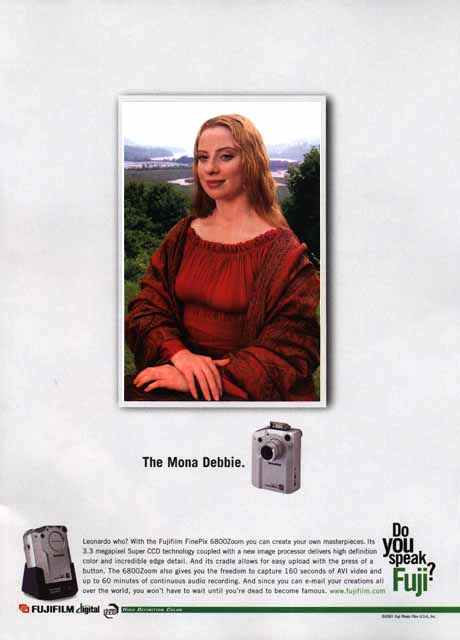
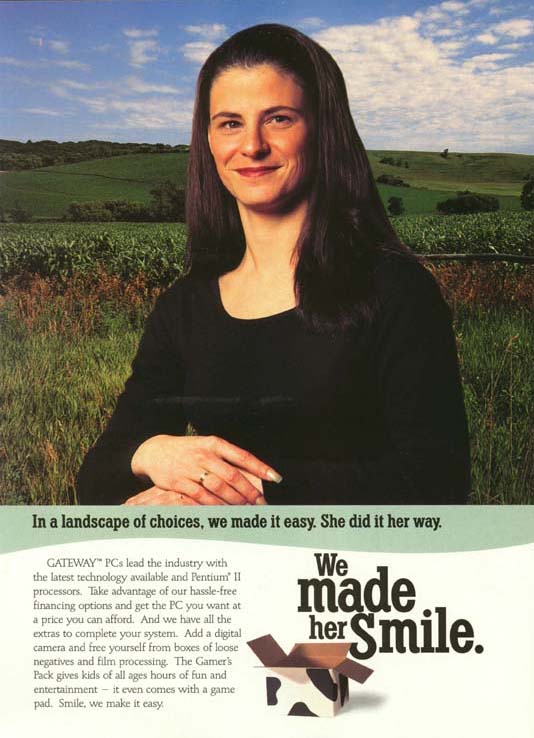
- Naturally, quite a lot of ads also incorporate the myth of the Mona Lisa.
- Q3. Pick one of these two ads (Fuji or Gateway, your choice) and explain how the ad builds upon the myth of the Mona Lisa, leveraging it to make the ad effective.
Q4:
- (from films and books) The lawman of Western films defends other people. His purpose in life is to combat Evil. He's strong and silent and never boasts. In the typical basic story, he rides into town alone, hitches his horse, walks into a local establishment, gets insulted by the villain and his henchmen, eventually has a victorious "showdown," and quietly rides out of town again.
- (from history) The cowboy is a symbol of the frontier and its values. The frontier conveyed a particularly American experience and produced a "superior individual". The cowboy tamed nature, brought order and control to the wilderness. He is a mythic figure taming the territory. Because he was improving it, he had a right to take it.
- Characteristics of cowboys in these versions of their myth:
- Cowboys are simple and individualistic.
- Cowboys are "men triumphing over nature."
- Cowboys kill Indians.
- Cowboys leave women at home. Cowboys are alone on the range.
- Cowboys are outlaws.
- Cowboys are rough and tough.
- Cowboys eat simple fare such as pork and beans.
- Cowboys dress for function.
- Cowboys shoot wolves.
- Authentic mythic example from Western films: Shane (1953)
- Story synopsis: Shane (Alan Ladd) is a gunfighter with an unknown
past. He rides into a cattle ranch in Wyoming one day and takes a
job as a ranch hand, attempting to change his life. The rancher gets
involved in an unfair dispute with a more powerful landowner, who
hires a tough gunslinger (Jack Palance) to drive the ranch family
away. After a series of escalating events, Shane realizes that he
has to take matters into his own hands, and he kills the gunslinger,
then rides off into the night.
- Here are three scenes: Shane rides in over the opening credits, the ultimate gunfight where Shane defeats the evil gunslinger, followed by Shane telling a kid who hero-worships him how to live, and then rides off into
the night (in effect reversing the scene over the opening credits).
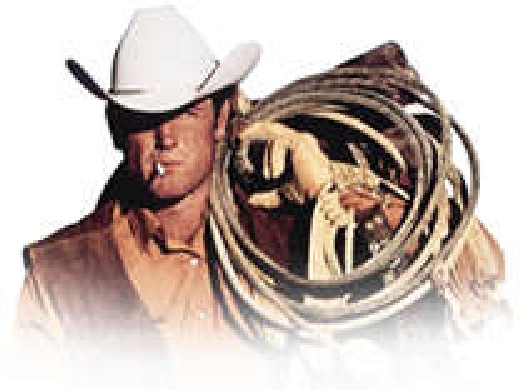
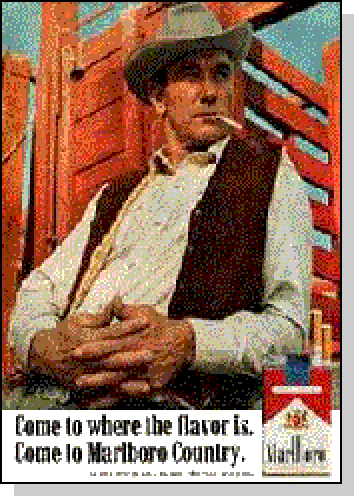
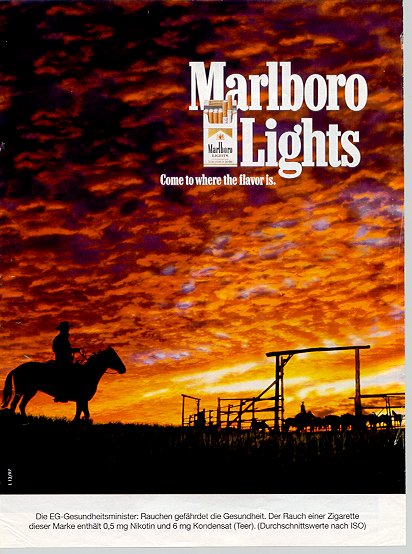
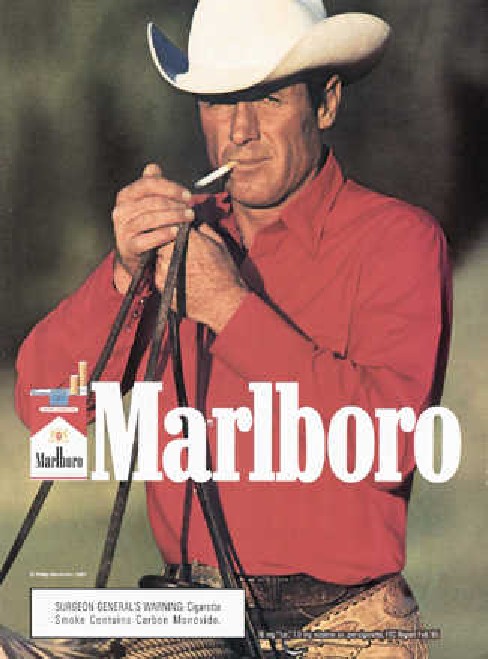
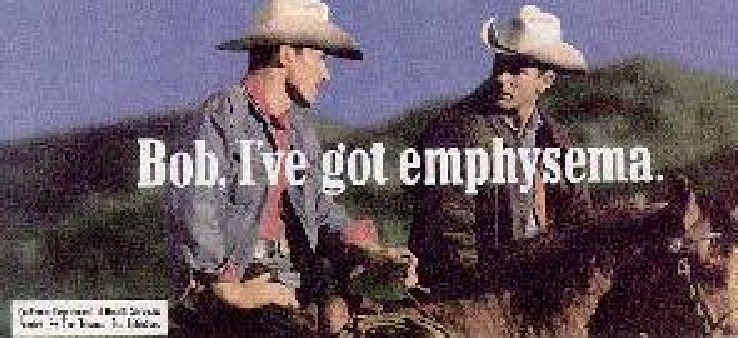
Consider the Marlboro man, as mentioned in the David Lodge novel excerpt back in Bundle 12. (icon)
So now consider this great old Super Bowl commercial Cat
Herder commercial, which was included back in Bundle 1.
Q4. How does this ad (cat herders) incorporate and take advantage of the cowboy myth? Include as many factors as you can in your answer.
Q5:
The cowboy myth is so enduring that it can serve as the foundation for many
other things. I want to show two examples.
- Example #1: The Right Stuff (no question is asked about this, so watch these clips mainly if you are interested in the topic; it's a great movie).
- This film contrasts the test pilot Chuck Yaeger, who was a loner,
individualistic, and pretty rugged, with the first astronauts
in the 1960s' Mercury program, who functioned more as cogs in a collective
operation.
- Yaeger is set up in the film as a cowboy (scenes running 04:30-16:50; it's enough to watch a few minutes of this to get the idea)
- 7 Mercury astronauts as group in famous shot 1:41:15-1:41:50-1:42:15.
BTW the way the astronauts are presented walking in a group has come to be known as "power walking", and it is parodied or imitated in lots and lots of films, to suggest strength and unity among the group walking. Here's one example from the great Pixar film Monsters, Inc.
- Yaeger returning alone from crash, still being presented as a cowboy loner: 2:55:38-2:56:00
- Example #2: Brokeback Mountain
- This 2005 film was the first major Hollywood movie about a gay love story with a big budget and featuring A-list stars.
- Here's the trailer to summarize the movie in a familiar form (or view it on youtube here)
- The two heroes are modern-day cowboys in dress, occupation,
isolation, rough manners, and all important characteristics.
- We pick up this sense of their cowboy lifestyle in an early
passage where they get ready for their summer with the sheep in
the remote mountain pastures 8:20-11:00
- One subsequent scene shows the transition from roughness to
tenderness on the part of Jack, initially rejected by Ennis 15:30-17:00
- Crucial conversation where they avow that they aren't "queer"
(31:50-32:20)
- Discussion of their relationship several years later, couched
in cowboy terms ( 9:50-10:40)
- Q5. The story in Brokeback Mountain could have been told with men engaged in any profession. How does making them modern-day cowboys affect the presentation of the story? (Consider how it would have affected the story and/or the public reception if the men were, for example, librarians, convenience store clerks, university professors, or anything else.)