The lecture first considered two fundamental bits of background information:
Background info #1: Relevance
Consider the following sentence:
It's raining.
What does this mean?
What does a person mean to communicate when
s/he says it?
Key: you usually say things that are relevant to
a situation, and therefore the reason for saying them,
and the ultimate message you mean to communicate, depends
heavily upon the shared knowledge of the relevant context
for the actual words.
Background info #2: Presupposition
We may state a piece of information: You are a lazy bum.
This has true value: it may be either true or false.
But we may also presuppose it: I'm so sorry you
are a lazy bum.
But embedded in this frame, the proposition "you are a lazy bum" has no truth value; it is presupposed (or automatically assumed) to be true, whether it is true or not.
This is like some classic joke lines:
Have you quit beating your wife? (or: Are you still
whipping your son every week?)
He called her a Republican, and then she insulted him
right back.
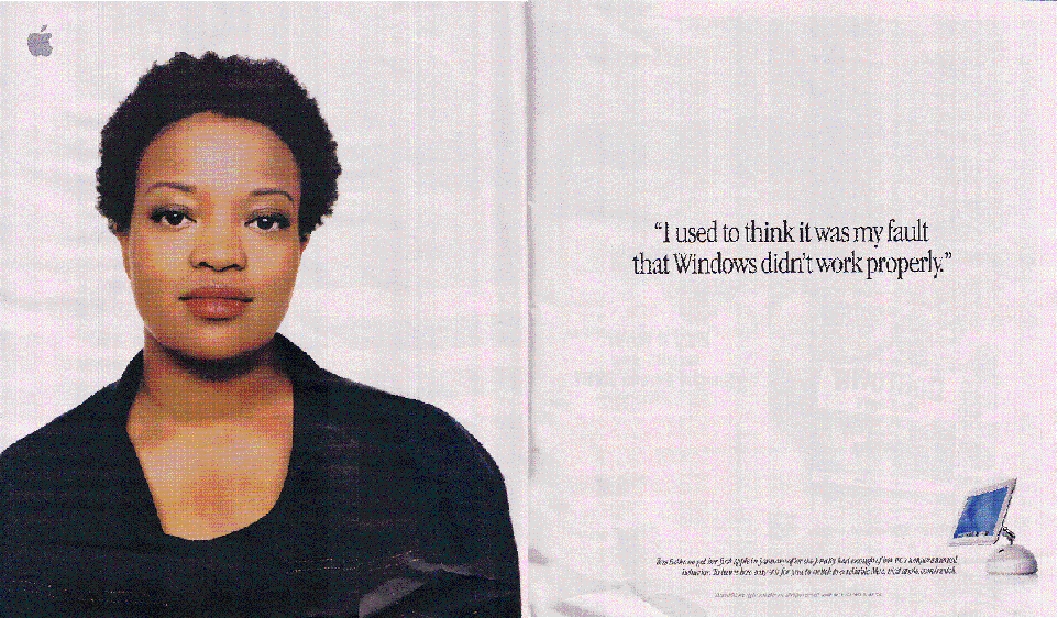
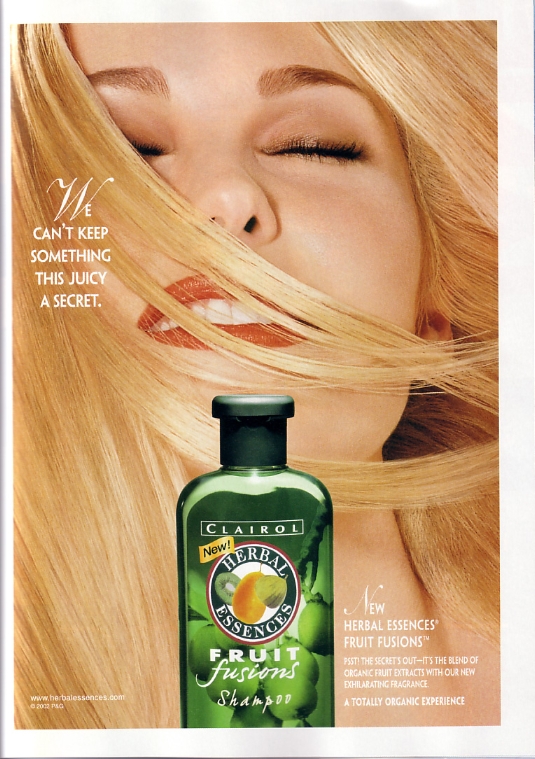
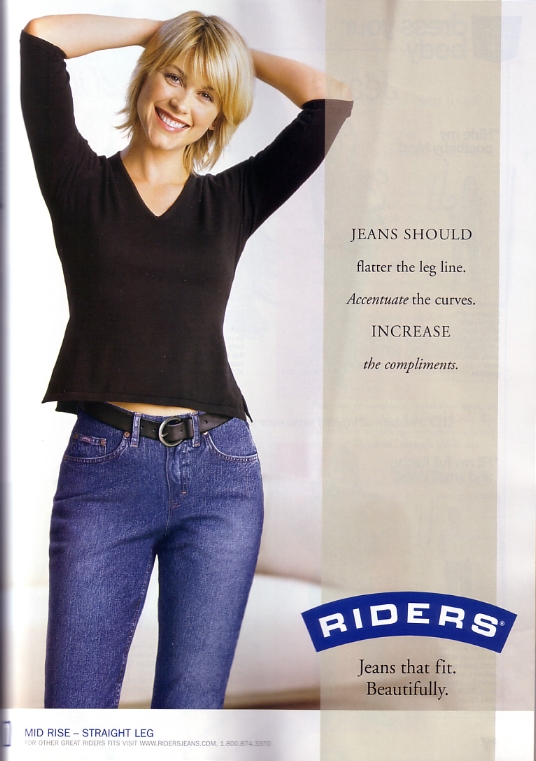
Ads of course may exploit these two principles of relevance and
presupposition
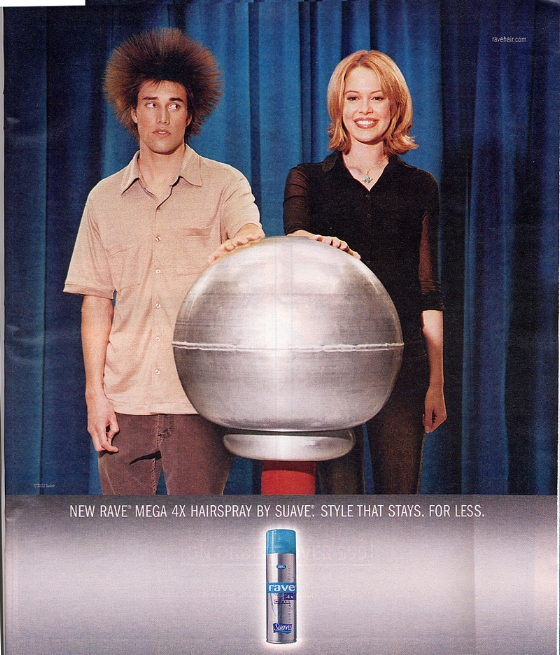
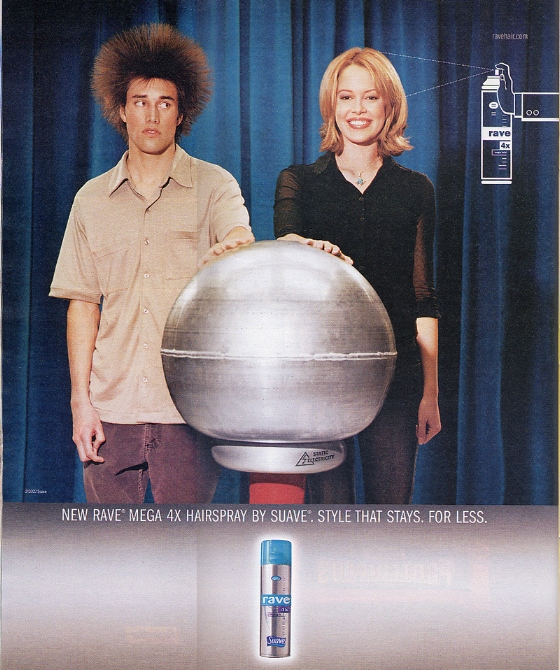
Here are several ads that illustrate presupposition (we looked at the first two in lecture):
#1 is how the ad actually ran. #2 is modified after the fact (not by the advertiser) to make the interpretation of the ad more explicit.
Q2. As a consumer yourself, which of these two versions of the ad is more effective in persuading you that Rave Mega 4X hairspray is a product you'd want to buy? Does it improve the ad or degrade it to make it more explicit?
Q3:
Now let's consider Grice's maxims of conversational behavior
These maxims summarize our tacit "contract" when
we participate in a conversation or other discourse situation
Speakers (generally) abide by these principles
Listeners expect them from the speaker
All of this happens on a subconscious level
But when one of these maxims is violated, we notice it
and intuitively understand what the other person means
anyway, due to our deep-rooted acceptance of these principles.
Grice's general Cooperative Principle:
Make your contribution [to a conversation] what is expected
of you, at the point in the conversation when you make it, in
keeping with the purpose or direction of the conversation you
are having.
This can be broken up into 4 maxims or specific practices of conversation
Maxim of Quality (make your contribution a true one, i.e. ...):
Do not say what you believe to be false.
Do not say that for which you lack adequate evidence.
Maxim of Relevance:
Be relevant.
Maxim of Quantity:
Make your contribution as informative as is required.
Do not make your contribution more informative than is required.
Maxim of Manner (be perspicuous):
Avoid obscurity of expression.
Avoid ambiguity.
Be brief.
Be orderly.
Maxims of Politeness (George Lakoff adding to Grice):
Avoid imposing.
Make the hearer feel good.
Give the hearer options.
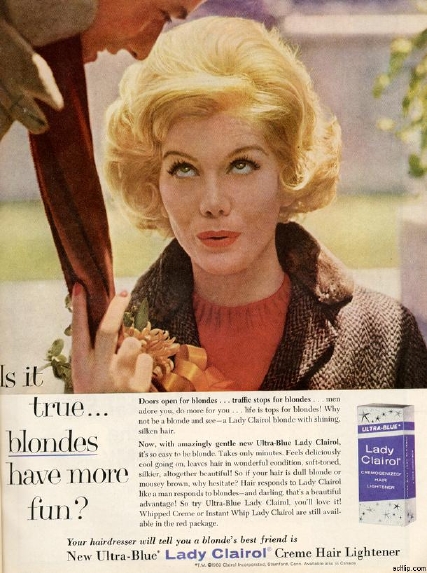
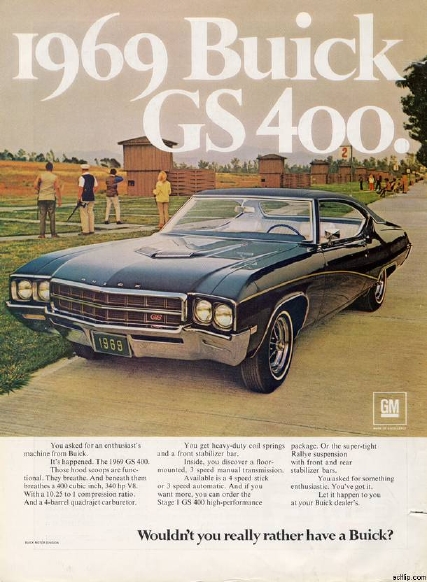
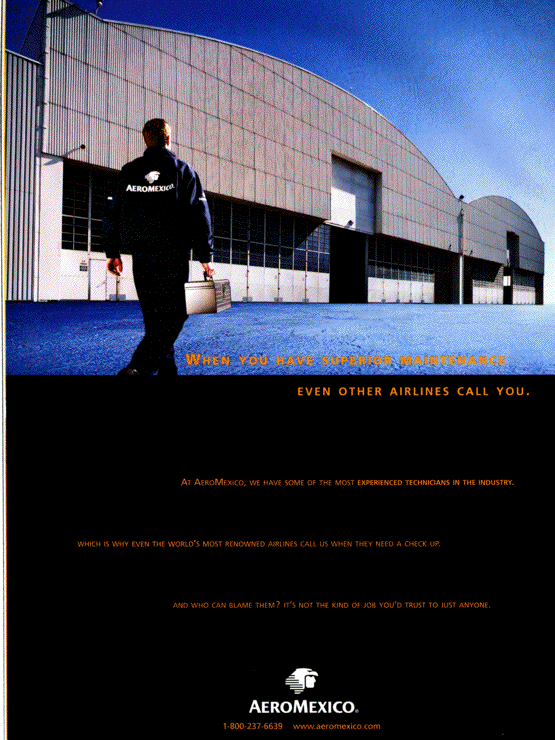
Here are three print ads that communicate more than they say directly due to our sensitivity to Grice's principles:
In these three ads, the main bit of prominent text encourages the reader to believe what the ad wants you
to believe (not necessarily what it literally says). The first two are really famous, classic ads.
Example: Clairol (headline: Is it true blondes have more fun?)
Example: Buick (tagline: Wouldn't you really rather have a Buick?)
Example: Aeromexico (caption: "When you have superior maintenance, even other airlines call you.")
Q3. Tell us how each of these three print ads leverages one of Grice's maxims to imply more than it actually states, and explain your reasoning. (Hint: concentrate on the featured line specified for each ad.)
Q4:
Here is a relatively straightforward (but excellent) Nike ad that takes advantage of the phenomena Grice studied:
Q4. Identify which of Grice's maxims enables us to interpret this ad as the makers intended, reaching beyond the apparently senseless surface story. Tell us why this works as you explain it.
Q5:
Here are two relatively difficult Levi's ads, where you have to stretch a bit to understand what the ad does to sell the product.
Q5. Explain what is going on in one of these two ads (your choice). In particular, what rhetorical trope do you observe here, and how is it driven by the ad's implicature? (Recall the example of a metaphor we have frequently referred to, "John is a pig." In case you have forgotten, the four master rhetorical tropes discussed in this course are metaphor, metonymy, synecdoche, and irony.)